
Travel Cost

Estimates the recreational value of natural locations by analysing how much people will pay to visit it. The difference between the maximum amount a visitor is willing to pay for visiting the site and the actual cost incurred in traveling to the site is the “consumer surplus” and can be used as a monetary expression of the value of the site.
Stated Preference Methods
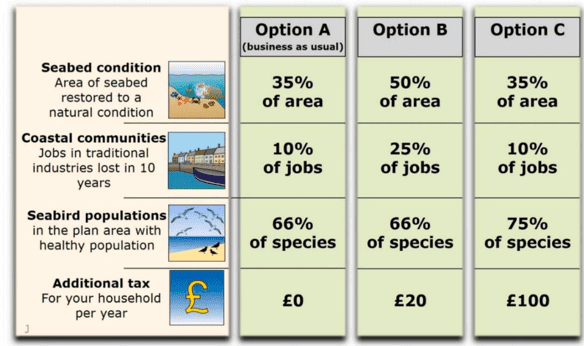
Questionnaire-based assessment of non-market valuation of environmental goods or services in a hypothetical market, such as improvements in water quality or biodiversity associated with an intervention policy. Willingness to pay (WTP) for the good is estimated using statistical procedures.
Hedonic Pricing
Bow-Tie Analysis

A structured risk and opportunity assessment methodology, based on ISO-accredited industry standards to analyse causes, consequences, and management options for biodiversity change in marine and coastal systems.
B4M
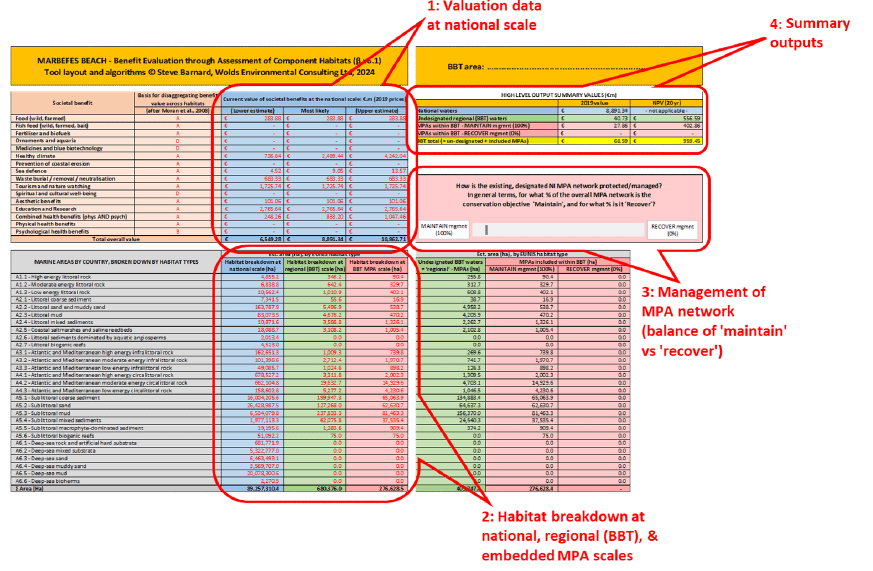
Uses a published methodology for estimating the value of marine environments at sub-national scales, for management purposes. Integrates natural capital accounting with spatial mapping of marine habitats, based on understanding of the links between habitats and ecosystem services.
Benefit Transfer
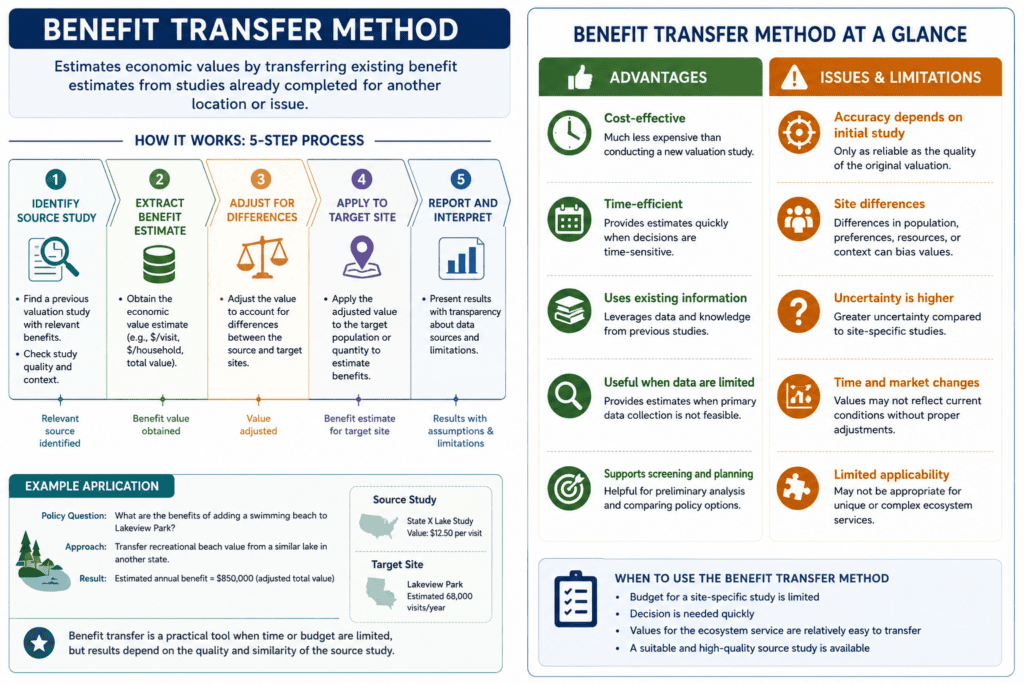
A set of techniques to estimate the economic value of non-market ecosystem services at a target site.