Telomeres as an indicator of physiological stress – TeloStress
- Category: Ecological
- Subcategory: Environmental risks & impacts
- Tool Type : Biomarker protocol
- Input data: Biological samples (DNA)
- Output: Telomere length measurements and information on Ecosystem health
- Target users: Researchers
- Location tested: Norwegian sea
- Level of uncertainty: Moderate
- Version: Not applicable
- Publication: Not applicable
- Rights: Not applicable
- Difficulty level of implementation: Complex
- Skill required (for method use): Advanced understanding of ageing processes, Advanced knowledge in molecular biology and genomics. The equipment needed for the collection of biological samples depends on the species of interest. For deep-sea corals, the use of the ROV technology is required. Determination of telomere length from biological samples (i.e., DNA) requires both basic and more advanced molecular laboratory facilities and equipment, including a spectrophotometer, qPCR machine, incubator, centrifuge, agarose gel electrophoresis system, restriction enzymes, blotting equipment, hybridization oven, chemiluminescence imager, and software for data analysis (e.g., ImageJ, R).
- Authors: Pierre Blévin, Jocelyn Palerud, Alexandre Ottaviani, Andreaz Dupoué
- Tool contributors: Astrid Harendza, Sabine Cochrane, Nadir Djerbi
- Project general coordinator: Sabine Cochrane
- Project Scientific manager: Pierre Blévin
- Project manager: Pierre Blévin
- Blévin, P., Angelier, F., Tartu, S., Ruault, S., Bustamante, P., Herzke, D., … & Chastel, O. (2016). Exposure to oxychlordane is associated with shorter telomeres in arctic breeding kittiwakes. Science of the Total Environment, 563, 125-130.
- Angelier, F., Costantini, D., Blévin, P., & Chastel, O. (2018). Do glucocorticoids mediate the link between environmental conditions and telomere dynamics in wild vertebrates? A review. General and comparative endocrinology, 256, 99-111.
- Rouan, A., Pousse, M., Tambutté, E., Djerbi, N., Zozaya, W., Capasso, L., … & Gilson, E. (2022). Telomere dysfunction is associated with dark‐induced bleaching in the reef coral Stylophora pistillata. Molecular Ecology, 31(23), 6087-6099.
- Dupoué, A., Koechlin, H., Huber, M., Merrien, P., Le Grand, J., Corporeau, C., … & Le Luyer, J. (2024). Reproductive aging weakens offspring survival and constrains the telomerase response to herpesvirus in Pacific oysters. Science Advances, 10(37), eadq2311.
-
- Name: Pierre Blevin
- Organization: Akvaplan niva
- Email: pbl@akvaplan.niva.no
Telomeres as an indicator of physiological stress
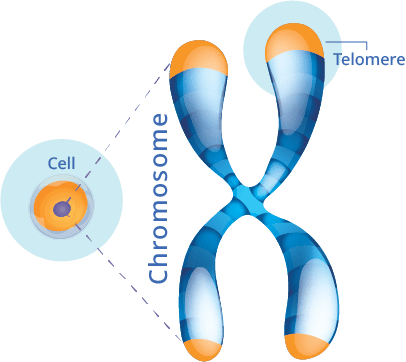
Telomeres are relevant molecular tools acting as relevant proxy of individual quality, lifestyle and lifespan of living organisms. Telomeres are non-coding DNA-protein complexes located at the end of linear chromosomes playing critical roles in maintaining and ensuring genomic integrity and stability. They progressively shorten along life, but their attrition is accelerated by a wide range of environmental stressors. When telomere length reaches a critical lower threshold, cell division can damage coding DNA leading to apoptosis or cellular senescence. Chronic stress, including changes in environmental conditions and demanding biological processes, has been shown to speed up telomere shortening thus reflecting the physiological stress. In that context, their use as stress proxy in ecology and environmental science has exponentially increased over the past years with numerous successful applications on vertebrates. They have been shown to be a strong indicator of individual fitness and even promising proxy for early warnings of population extinction risks. Applications in marine invertebrates are sparse and MARBEFES aims to bring this potent tool into the realms of the marine environment, especially on sensitive species located in vulnerable marine ecosystems. Sub-lethal stress indicators, capable of distinguishing intermediate stress status are essential for early intervention and thus preservation and sustainable management of vulnerable marine ecosystems forming species.
Samples of deep-water corals were collected in northern and mid Norway. The collection has been carried out along a disturbance gradient, in the vicinity of aquaculture production facilities. Based on existing methods, we established a protocol to measure telomere length in Paragorgia arborea using the terminal restriction fragment (TRF) assay which is considered as the gold standard technique for telomere DNA length measurement. In a second step, we aimed to explore their application as relevant molecular tools to investigate sub-lethal stress in corals exposed to changes in environmental conditions.
URL / Availability:
-
URL: N/A