Category: Ecological
Subcategory: Risk and Opportunity Assessment – Bow-tie Analysis
Tool type: Conceptual and semi-quantitative risk assessment framework (ISO 31000-compliant)
Input data:
-
Narrative storylines and scenarios developed for BBTs
-
Stakeholder knowledge (qualitative and semi-quantitative)
-
Data on drivers, activities, pressures, and biodiversity change (from monitoring, models, or expert judgement)
-
References to EU MSFD indicators and descriptors where possible
Output:
-
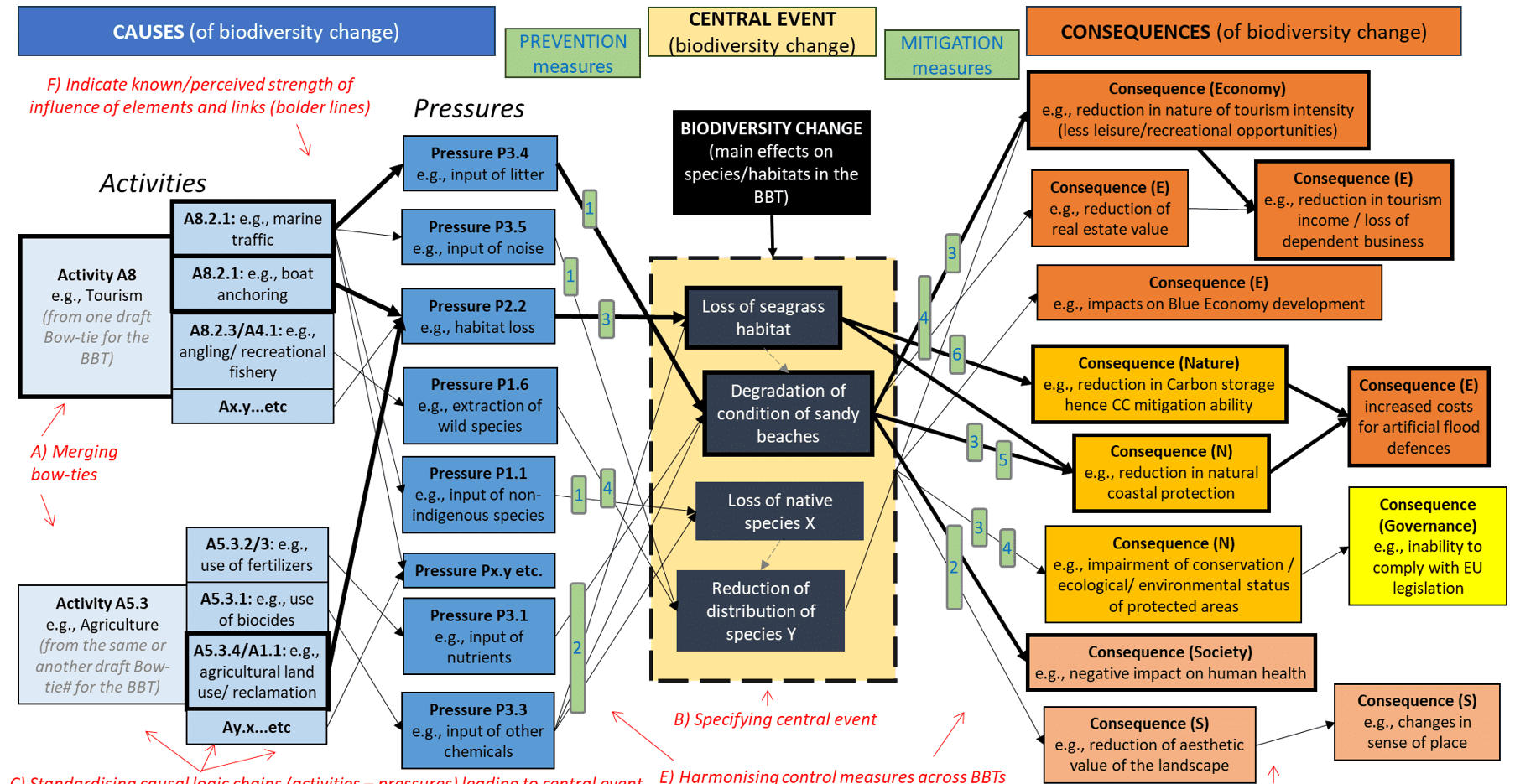
Bow-tie diagrams showing causes, consequences, and management options
-
Clear differentiation between prevention and mitigation/adaptation measures
-
Framework for integrating models and indicators (e.g. Bayesian Belief Networks)
-
Support for scenario-based planning and stakeholder communication
Target users: Researchers, policymakers, regulators, marine managers, practitioners
Location tested: Applied across Broad Belt Transects (BBTs) in MARBEFES (case study locations include North & South Svalbard, Baltic, North Sea, Irish Sea, Biscay, Mediterranean, etc., depending on storyline selection)
-
Version: Final Guidance, Version 3.0 (October 2023)
MARBEFES-WP5.1_Bow-tie Guidance…
-
Publication: Internal MARBEFES WP5.1 Deliverable – Guidance for Bow-tie Storyline Creation and Analysis at BBTs
-
Rights: EU Horizon Europe Grant Agreement no. 101060937 and UKRI Grant no. 10048815
-
Task Leader: Mike Elliott (IECS Ltd.)
-
Authors: Mike Elliott, Katie Smyth, Anita Franco, Roland Cormier (IECS Ltd.)
MARBEFES-WP5.1_Bow-tie Guidance…
-
Project coordination:
-
General Coordinator: Jan Marcin Węsławski
-
Scientific Manager: Julie Bremner
-
Project Manager: Joanna Przedrzymirska-Ziółkowska
-
-
Burdon et al. (2018) Estuarine, Coastal and Shelf Science
-
Cormier et al. (2013, 2018, 2019, 2022) ICES Reports; Science of the Total Environment
-
Elliott et al. (2013, 2014, 2019, 2020, 2023) Marine Pollution Bulletin; Ocean & Coastal Management
-
Defeo & Elliott (2021) Marine Pollution Bulletin
-
Barnard & Elliott (2015) Environmental Science & Policy
-
Lead contact: Mike Elliott – Mike.Elliott@iecs.ltd
-
Co-lead contact: Anita Franco – Anita.Franco@iecs.ltd
MARBEFES-WP5 BT finalisation_sl…
-
Institution: International Estuarine & Coastal Specialists (IECS) Ltd.
Bow-tie analysis
The Bow-tie tool within the MARBEFES project is a structured risk and opportunity assessment methodology, adapted from ISO-accredited industry standards, to analyse causes, consequences, and management options for biodiversity change in marine and coastal systems. It combines conceptual clarity with stakeholder-driven inputs, enabling a visual representation of complex socio-ecological risks.
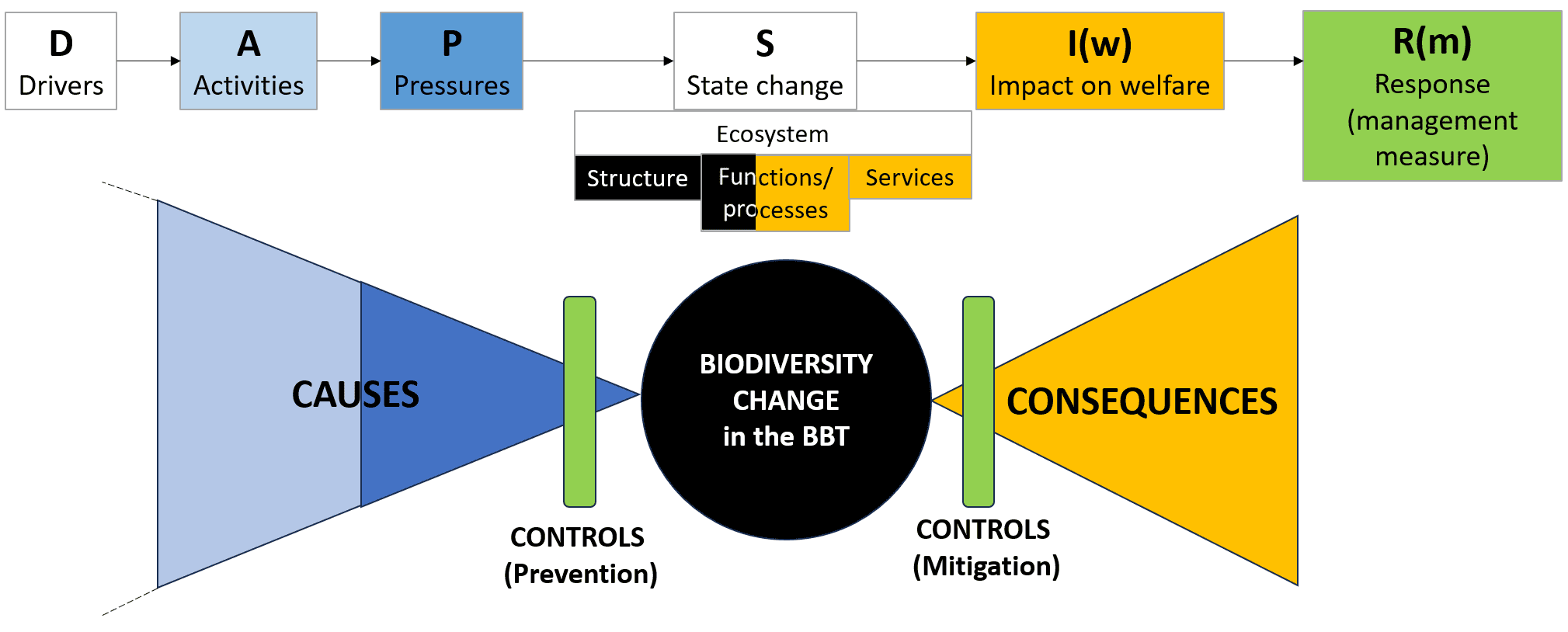
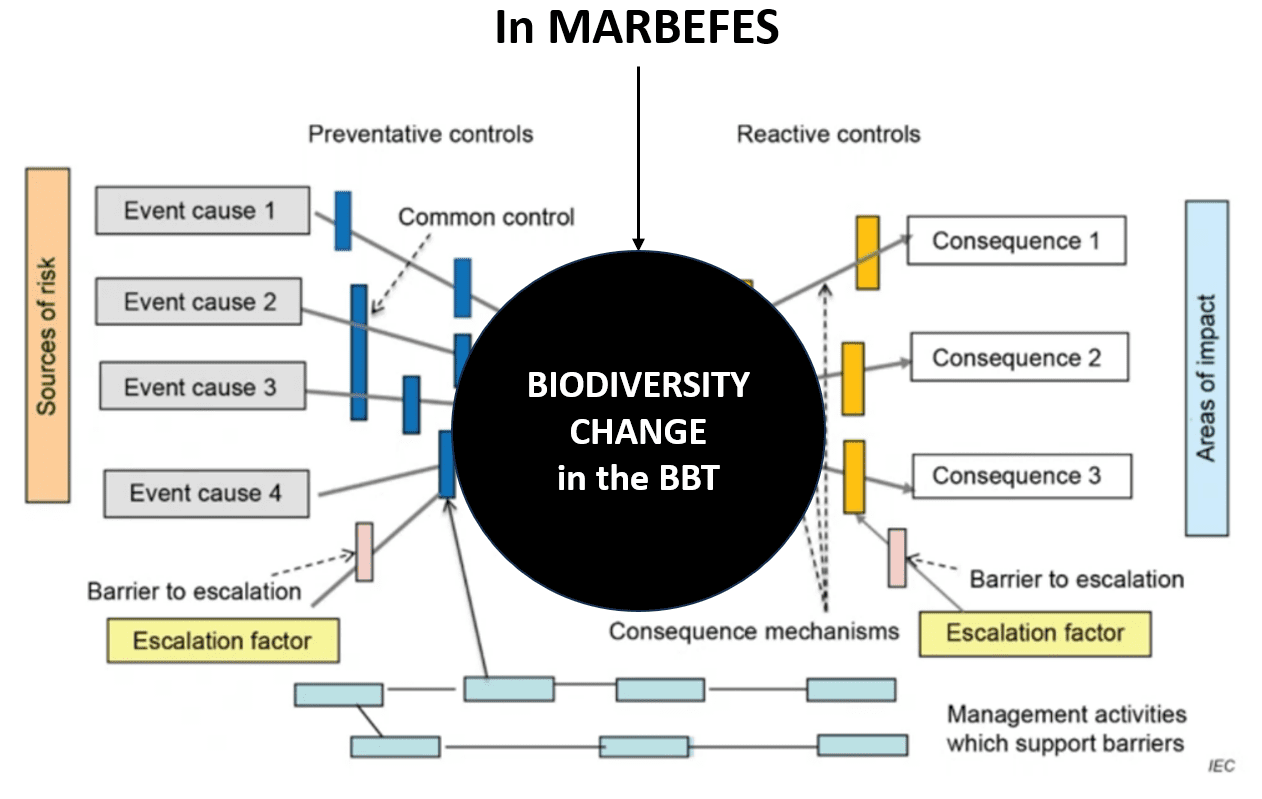
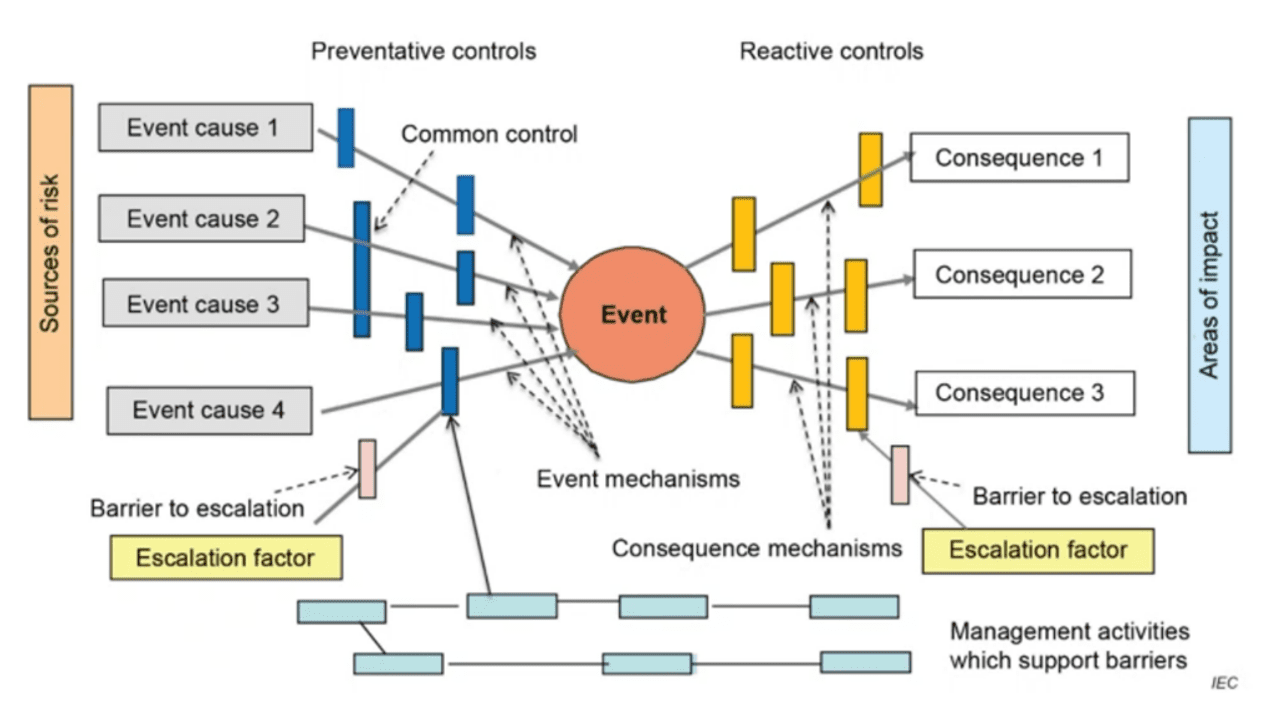
At its core, the Bow-tie diagram depicts a central “knot” representing a key biodiversity risk or management concern in a Broad Belt Transect (BBT). The left-hand side identifies drivers, activities, and pressures (causes), while the right-hand side details ecological and societal consequences. Preventive controls (e.g. policies, regulations, technical interventions) are linked to causes, while mitigation, compensation, adaptation, or recovery measures are linked to consequences. The diagram also allows for escalation factors, which highlight conditions undermining management effectiveness.
The framework integrates seamlessly with the DAPSI(W)R(M) approach (Drivers, Activities, Pressures, State changes, Impacts on Welfare, Responses with Measures), ensuring consistency with EU environmental directives such as the MSFD, MSPD, and the EU Biodiversity Strategy 2030. A major strength is its ability to highlight both risks and opportunities, allowing stakeholders to identify not only potential losses (e.g. habitat degradation, reduced fisheries yields) but also opportunities (e.g. new ecosystem services, innovative management approaches).
Within MARBEFES, Bow-tie diagrams are developed for each BBT through scenario and storyline workshops with local stakeholders. They serve as problem-structuring methods that can incorporate qualitative knowledge, semi-quantitative scoring, and potentially Bayesian Belief Network modelling. This approach has previously been tested in EU projects like CERES and VECTORS, where Bow-tie diagrams helped to visualise risks of climate change on fisheries and aquaculture.
The Bow-tie tool offers a clear, communicable picture of cumulative risks, enabling decision-makers, regulators, and practitioners to evaluate management strategies. It is particularly effective in transboundary contexts, where coherence across governance systems is critical. In MARBEFES, Bow-ties are applied to biodiversity-related challenges in multiple European case studies, helping to link natural capital, ecosystem services, and societal benefits into an integrated assessment.
URL / Availability:
-
Proprietary software used: BowTieXP (Wolters Kluwer)
-
Guidance documents are internal deliverables but can be requested through MARBEFES project partners.