Participatory Socio-Cultural Valuation—interviews, focus groups, arts-based workshops
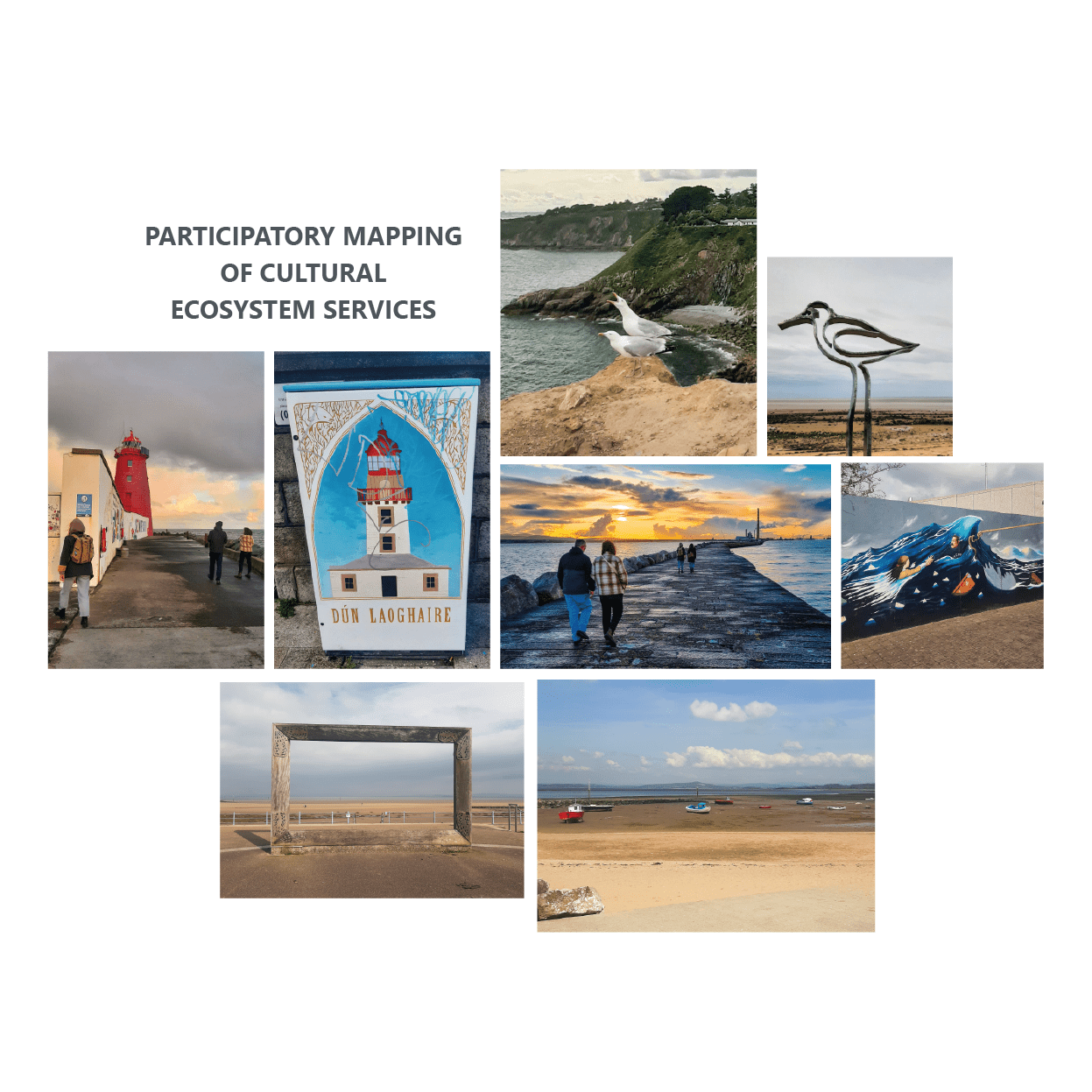
Category: Cultural
Subcategory: Participatory Research – Social perceptions of cultural ecosystem services
Tool type: Mixed participatory methods ( interviews, focus groups, arts-based research)
Input data:
- Stakeholder responses (qualitative and quantitative: oral, written, artistic, spatial, numerical)
- Focus group discussions and interviews
- Cultural representations (literature, art, media, photography, etc.)
- Observational and experiential studies
Output:
- Datasets of stakeholder perceptions (quantitative and qualitative)
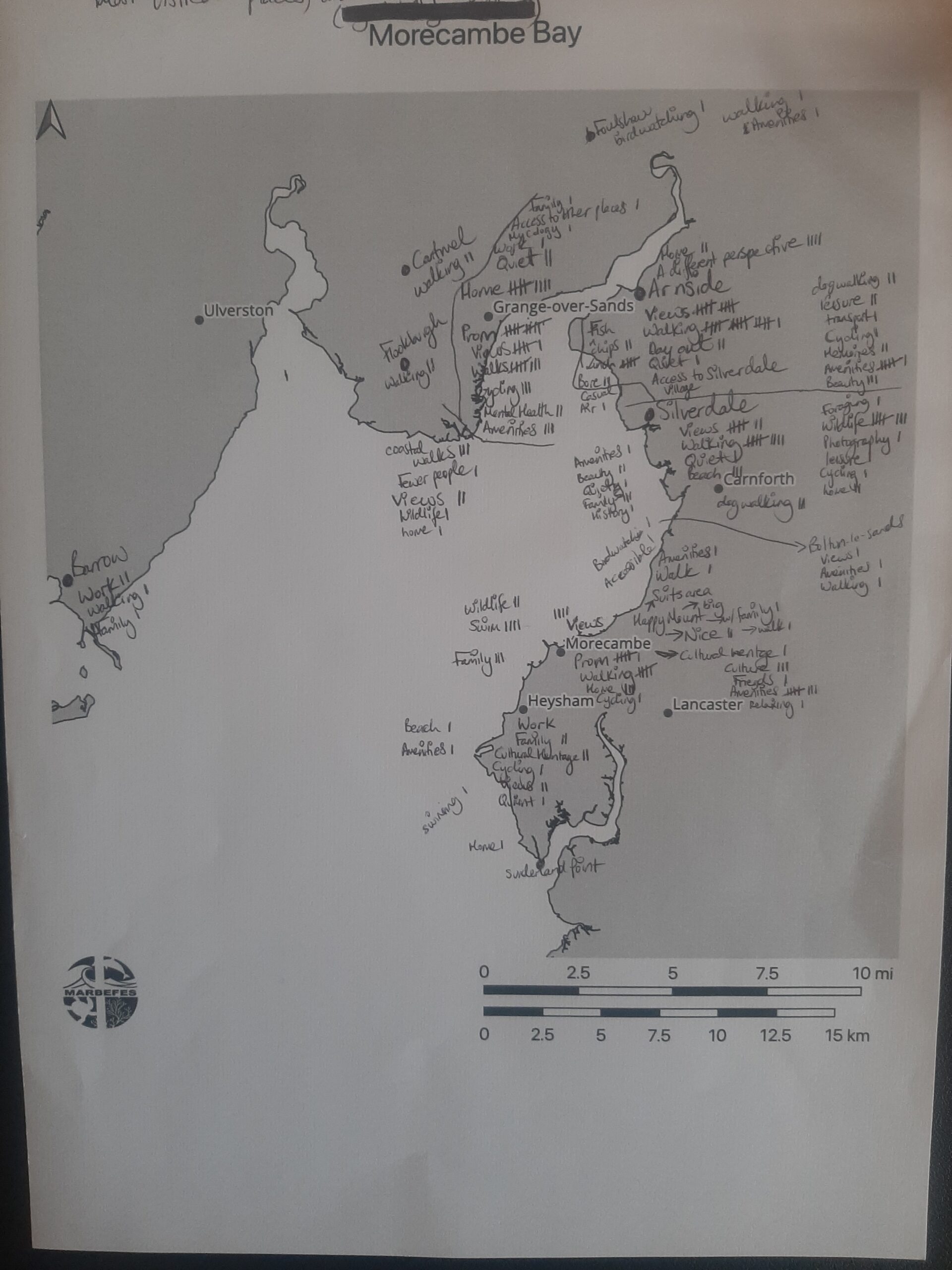
- Maps of cultural ecosystem hotspots and services
- Thematic analyses of cultural values and conflicts
- Reports, visual material, and creative expressions representing community perspectives
Target users:
Scientists, technical experts, policymakers, NGOs, local communities, cultural heritage organisations, and environmental managers
Location tested / examples:
- Irish Sea (Dublin Bay, Strangford Lough, Cumbria Coast, Morecambe Bay)
- Gulf of Gdansk
- Applied in MARBEFES BBTs through distributed guidelines and local stakeholder engagement
- Version: Draft Guidelines distributed in MARBEFES BBTs (2024–2025)
- Publication: Written guidelines exist; may be included in MARBEFES WP4 Handbook.
- Rights: Toolkit “Cultural Value of Coastlines” licensed under Creative Commons 3.0 Attribution-ShareAlike
- Lead author: Ashley Cahillane (MARBEFES WP4) – aislaigh@gmail.com
- Toolkit contributors (Cultural Value of Coastlines project, University College Dublin):
- John Brannigan
- David Cabana Permuy
- Tasman Crowe
- Frances Ryfield
- Cabana, D., F. Ryfield, T. P. Crowe, J. Brannigan (2020). “Evaluating and communicating cultural ecosystem services.” Ecosystem Services 42. https://doi.org/10.1016/j.ecoser.2020.101085.
- Cahillane, A., J. Forster, D. Kołbuk, J. Brannigan (2025). “Offshore cultural ecosystem services: evidence from open-sea research.” Ecosystem Services 76. https://doi.org/10.1016/j.ecoser.2025.101783.
- Ryfield, F., D. Cabana, J. Brannigan, and T. Crowe (2019). “Conceptualizing ‘sense of place’ in cultural ecosystem services: A framework for interdisciplinary research.” Ecosystem Services 36: 1 – 13. https://doi.org/10.1016/j.ecoser.2019.100907
- [Below are academic papers which informed the theoretical approach to this tool.]
- Buitendijk, T. A. Cahillane, J. Brannigan, T. P. Crowe (2024). “Valuing plurality: Environmental humanities approaches to ecosystem services and Nature’s Contributions to People.” Environmental Science & Policy 162. https://doi.org/10.1016/j.envsci.2024.103907.
- Bullock, C. (2020). “A role for diverse environmental values in bringing about policy change: an example from Ireland.” Biology and Environment: Proceedings of the Royal Irish Academy 120B (2): 115 – 122. https://doi.org/10.3318/bioe.2020.10.
- Díaz, S., Demissew, S., Carabias, J., Joly, C., Lonsdale, M., et al. (2015). The IPBES Conceptual Framework — connecting nature and people. Current Opinion in Environmental Sustainability 14: 1 – 16. https://doi.org/10.1016/j.cosust.2014.11.002
- Fish, R., A. Church and M. Winter (2016). “Conceptualising cultural ecosystem services: a novel framework for research and critical engagement.” Ecosystem Services 21: 208 – 217. https://doi.org/10.1016/j.ecoser.2016.09.002
- Gould, R.K., S. C. Klain, N. M. Ardoin, T. Satterfield, U. Woodside, N. Hannahs, G. C. Daily, K. M. Chan. 2015. “A protocol for eliciting nonmaterial values through a cultural ecosystem services frame.” Conservation Biology 29(2): 575-86. Hhtps://doi.org/10.1111/cobi.12407.
- Ashley Cahillane – aislaigh@gmail.com
- University College Dublin and University of East Anglia
Participatory Socio-Cultural Valuation—interviews, focus groups, arts-based workshops
The Participatory Socio-Cultural Valuation—interviews, focus groups, arts-based workshops tool in MARBEFES is designed to capture social perceptions and cultural values associated with ecosystems, particularly in coastal and marine contexts. It focuses on the two-way relationships between humans and nature, assessing how ecosystems provide cultural benefits such as a sense of place, relaxation, inspiration, spiritual value, and community well-being, while also considering how human interactions contribute to the co-production and maintenance of ecosystem health.
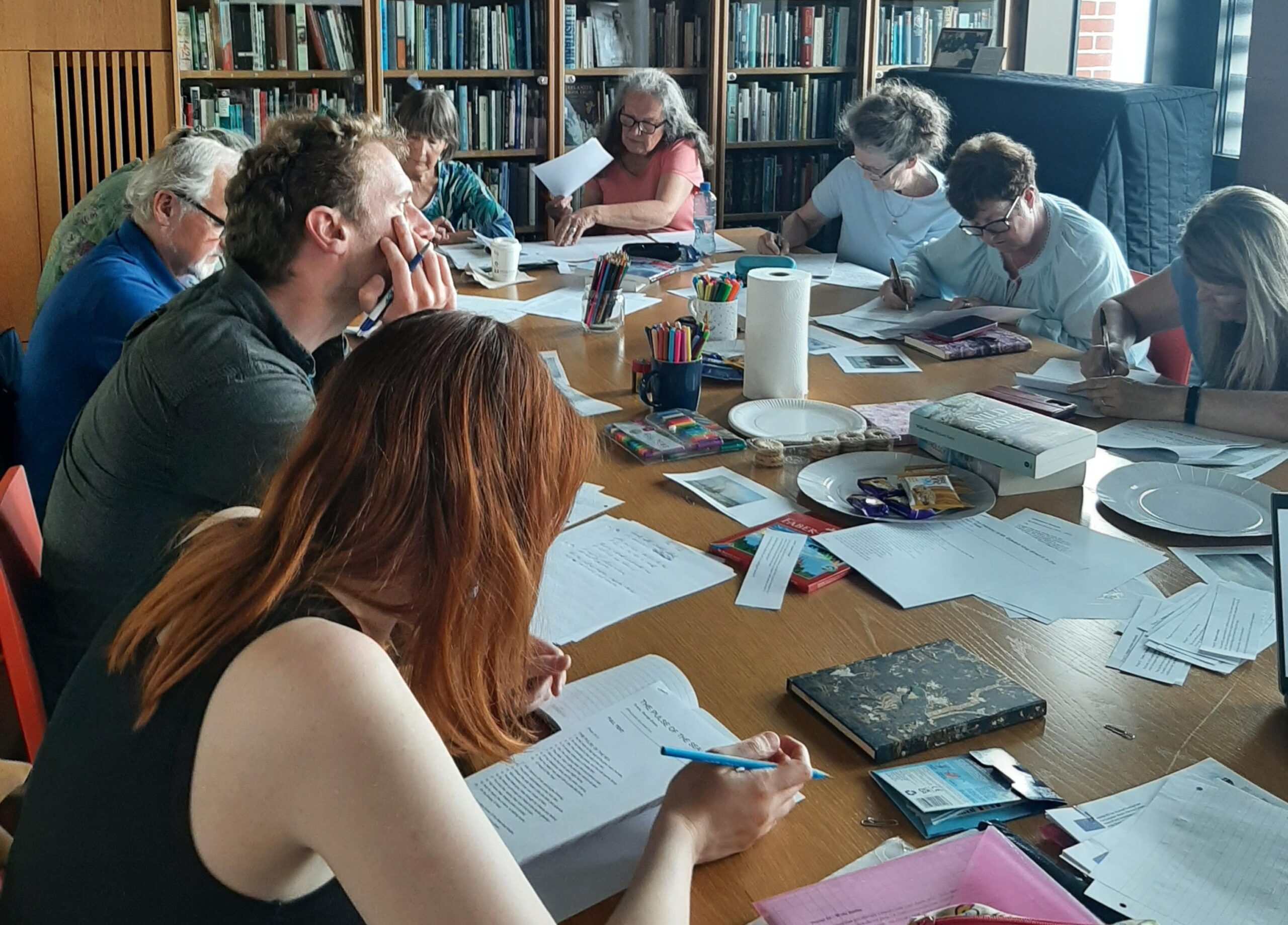
This tool uses a multi-method participatory approach, including interviews, focus groups, workshops, and arts-based activities. Through these methods, it elicits both qualitative and quantitative data on how stakeholders perceive ecosystem change, management, and cultural benefits. For instance, community members might map cultural hotspots, share stories, or express their connection through artistic means.
By engaging a diverse range of stakeholders—such as fishers, conservationists, local residents, artists, heritage groups, NGOs, and businesses—the tool uncovers both common values and conflicting perceptions. This enables planners and policymakers to understand what aspects of cultural ecosystem services are most valued, which may not be captured through conventional economic valuation.
Outputs include datasets, spatial mappings of cultural ecosystem services, and narratives of human-nature interactions. These results can inform environmental planning, marine spatial planning, and policy design, ensuring decisions align with local cultural values and priorities. Importantly, the tool strengthens the sense of community ownership and stewardship over ecosystems, as participants are actively involved in co-producing knowledge rather than being passive respondents.
The method builds upon resources like the Cultural Value of Coastlines Toolkit
cultural-value-of-coastlines-to…, which provides guidance on participatory surveys, mapping, local advisory groups, and cultural representations. This expands the evidence base for ecosystem services assessments, filling a key gap where cultural values are often underrepresented or excluded.
Overall, the Participatory Research tool offers a flexible, inclusive, and scalable framework for integrating cultural ecosystem services into environmental governance, from local communities to regional and EU-level strategies.
This tool works well when paired with the Participatory Socio-cultural Valuation—questionnaire tool to collect data from a large amount and range of stakeholders, which can present a comprehensive portrait of diverse local (and in some cases touristic) perceptions.
Availability / URL:
- Example application: https://culturalvalueofcoastlines.com/
- Toolkit: Cultural Value of Coastlines Toolkit PDF
- Toolkit: Public Participation geographical information systems (PPGIS)