- Category: Ecological
- Subcategory: Biogeochemical Modeling
- Tool Type : Ecological modeling framework
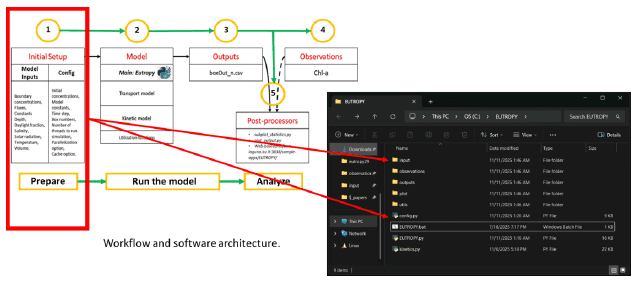
- Input data:
- Fluxes between computational boxes or riverine discharges: Fluxes represent volumetric water transport (m³/day).
- Boundary Conditions: Boundary concentration files define the chemical composition of inflows such as rivers or sea water intrusions.
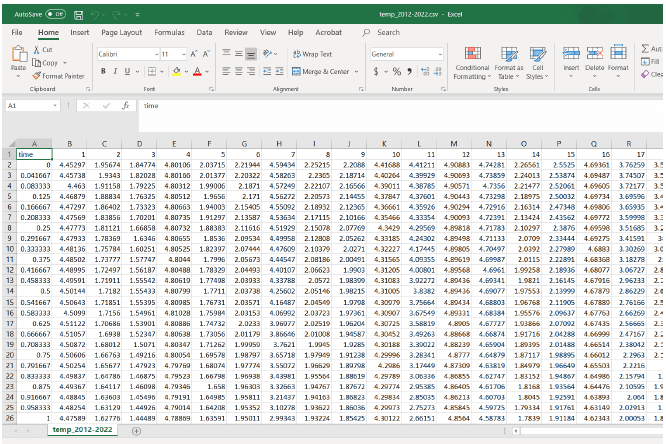
- Environmental forcing files: Environmental forcing files describe temperature, radiation, and light availability.
- Bathymetry file: Volume and depths of each computational boxes should be provided
- Initial concentration files: Initial concentration files define the starting state of the system as concentration values and must be entered for each state variable simulated.
- Model Constants: Parameter files control reaction rates. Pelagic constants define reaction kinetics in the water column and are mandatory.
- Output:
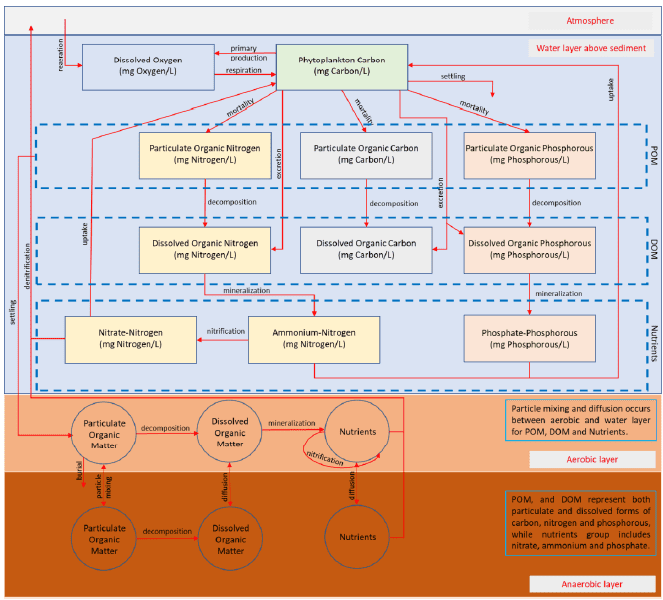
- Phytoplankton Biomass in Carbon
- Nutrient Concentrations
- Dissolved Oxygen Concentration
- Target users:
- Environmental scientists and engineers,
- students learning aquatic ecosystem modelling,
- practitioners performing scenario analysis.
- Location tested: Lithuanian coast (Curonian Lagoon)
- Level of uncertainty: Therefore, uncertainty analysis is required, as uncertainty arises from both input data, including field measurements, and structural assumptions embedded in the model equations.
- Version: Version 1.0
- Publication: https://doi.org/10.1016/j.softx.2025.102430
- Rights: Open Access under MIT license for more information: https://github.com/kaynarob/EUTROPY/blob/main/LICENSE
- Difficulty level of implementation: Moderate
- Skill required (for method use): High
- Authors: Burak Kaynaroglu
- Tool contributors: Burak Kaynaroglu
- Project general coordinator: Jan Marcin Węsławski
- Project Scientific manager: Julie Bremner
- Project manager: Joanna Przedrzymirska-Ziółkowska
- Kaynaroglu, B. et al. (2025). SoftwareX – DOI: 1016/j.softx.2025.102430
- Kaynaroglu, B. et al. (2025). Ecological Informatics – DOI: 1016/j.softx.2025.102430
- Kaynaroglu, B. (2025). EUTROPY repository in GitHub. https://github.com/kaynarob/EUTROPY
- Name: Burak Kaynaroglu
- Organization: Klaipeda University
- Email: burak.kaynaroglu@ku.lt
EUTROPY
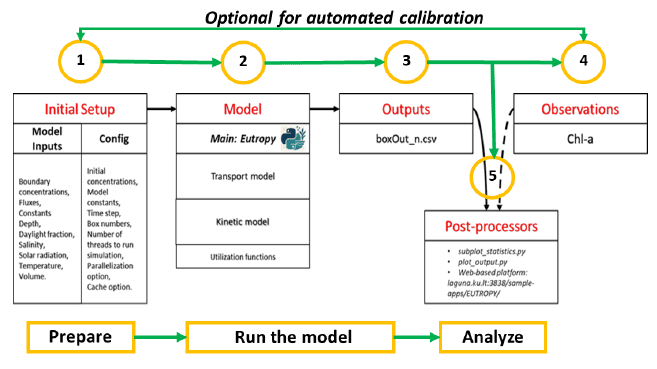
EUTROPY is a mechanistic eutrophication modelling framework based on a box-modelling approach, developed in Python to analyze nutrient loading pathways, ecosystem responses, and management scenarios in aquatic systems, combining conceptual simplicity with computational efficiency to support robust, long-term simulations across lakes, lagoons, estuaries, and coastal waters. The model is computationally optimized using just‑in‑time (JIT) compilation, enabling fast execution even for long simulations or during automated calibration.
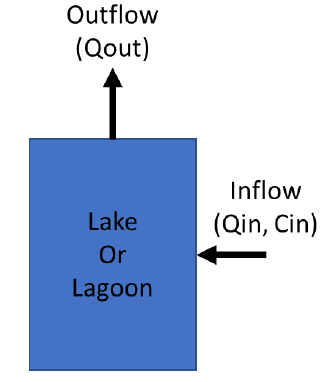
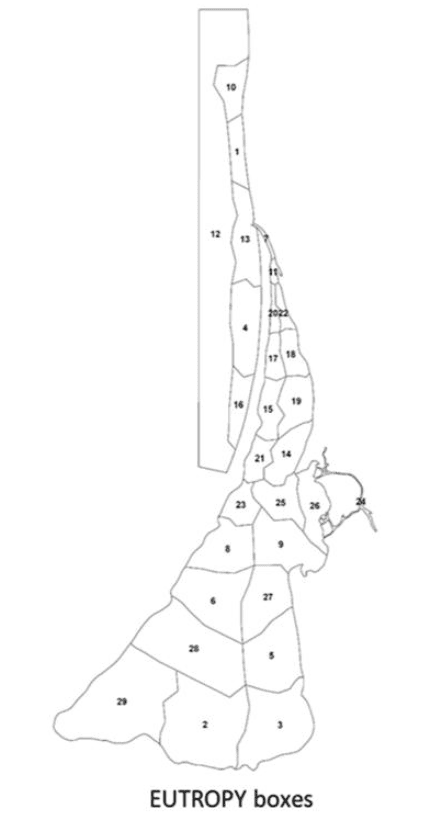
EUTROPY simulates eutrophication by representing an aquatic system as a set of well-mixed boxes. Each box is assumed to be homogeneous, meaning that temperature, nutrients, oxygen, and biological variables are uniform within that box. Water moves between boxes or between boxes and system boundaries through prescribed fluxes, which are provided by the user. These fluxes represent river inflows, outflows, exchanges between computational boxes, or water exchange with the sea. Transport and biogeochemistry are treated separately. The model does not calculate currents or circulation internally; instead, it focuses on how nutrients and biomass changing under prescribed transport conditions.
Within MARBEFES, the Curonian Lagoon BBT is analyzed using the EUTROPY eutrophication modelling framework and its earlier versions, which represents the lagoon as a system of connected, well-mixed boxes driven by prescribed fluxes and boundary loads. The model is applied to simulate nutrient cycling, primary production, and oxygen dynamics under riverine forcing. EUTROPY supports the integration of observational data, hydrodynamic information, and scenario-based inputs, enabling both qualitative understanding and quantitative assessment of ecosystem responses.
This modelling approach has been developed, tested, and published in two peer-reviewed scientific studies using the Curonian Lagoon as a representative case study, where it has been applied primarily for model calibration against observational data. This calibration step provides a necessary and robust foundation for subsequent long-term scenario analyses and the evaluation of nutrient management strategies. By providing a transparent and computationally efficient representation of ecosystem processes, EUTROPY offers a clear and communicable picture of eutrophication dynamics, supporting decision-makers, and practitioners in assessing cumulative pressures and potential management options.
Beyond the Curonian Lagoon application, EUTROPY is designed as a transferable and system-independent tool that can be applied across a wide range of aquatic environments, including lakes, rivers, estuaries, lagoons, and coastal waters. The approach is particularly suitable for transboundary and data-limited aquatic systems, such as the Curonian Lagoon, which operate at smaller spatial scales than open-ocean systems and require consistent, system-wide assessment across governance contexts, together with an integrated understanding of nutrient pressures, ecosystem functioning, and societal benefits.
- Availability / URL: https://github.com/kaynarob/EUTROPY