Category: Cultural
Subcategory: Participatory Research – Social perceptions of cultural ecosystem services
Tool type: Participatory method: (questionnaire and spatial mapping)
Input data:
- Stakeholder responses (qualitative and quantitative: oral, written, artistic, spatial, numerical)
- Surveys and questionnaires (map-based, paper, or online platforms)
Output:
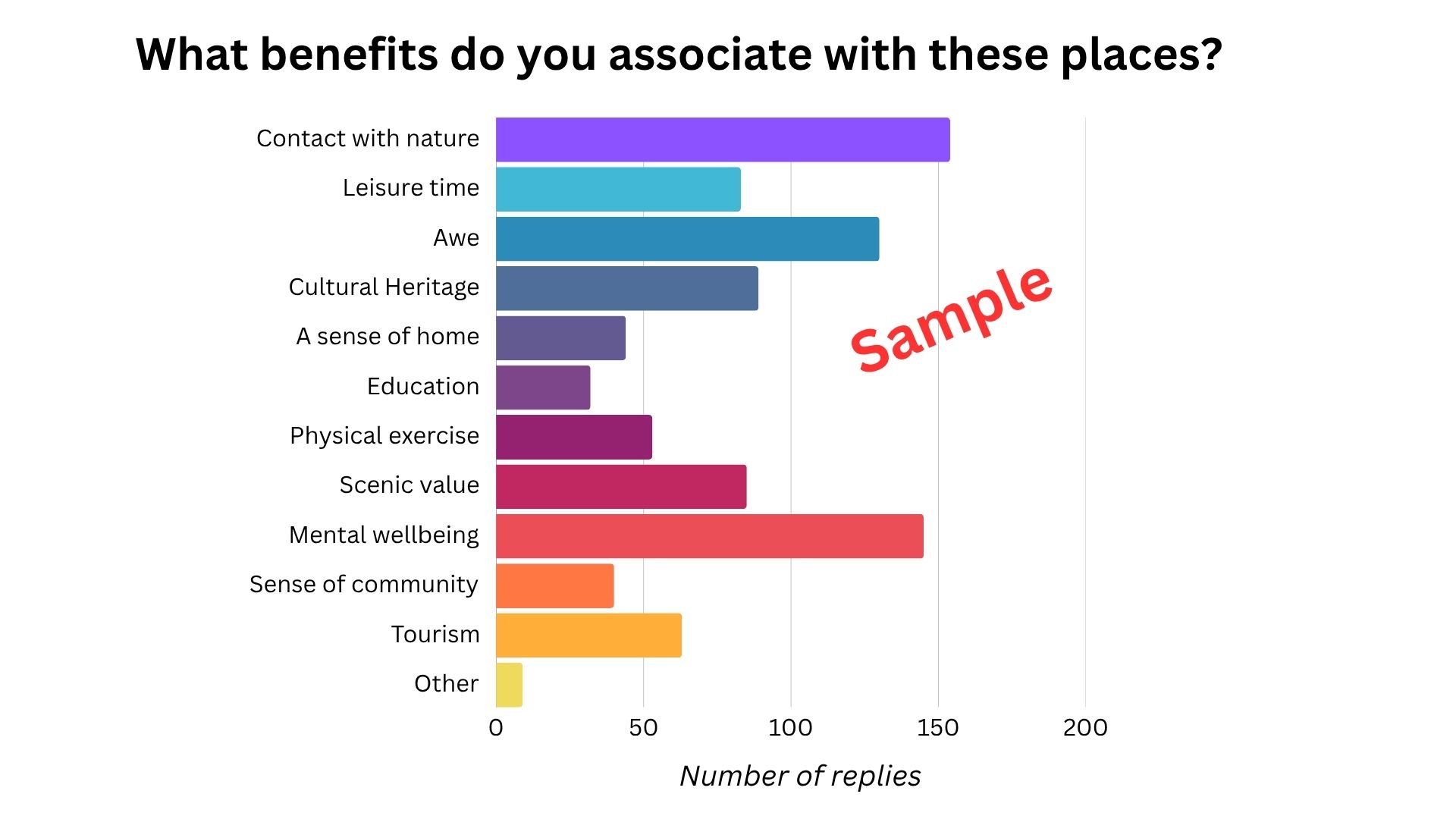
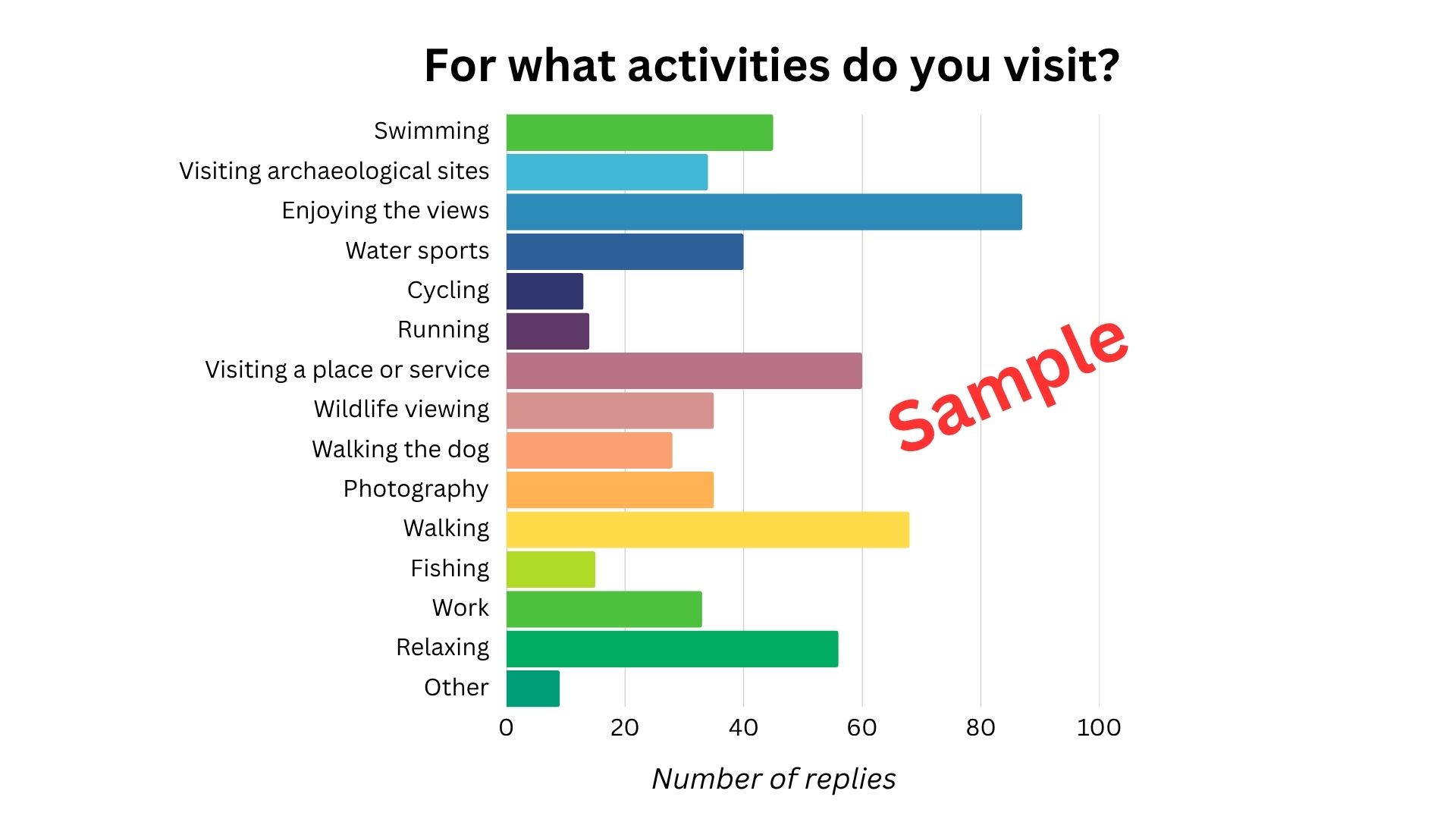
- Datasets of stakeholder perceptions (quantitative and qualitative)
- Maps of cultural ecosystem hotspots and services
- Thematic analyses of cultural values and conflicts
- Reports, and visual material representing community perspectives
Target users:
Scientists, technical experts, policymakers, NGOs, local communities, cultural heritage organisations, and environmental managers
Location tested / examples:
- Irish Sea (Dublin Bay, Strangford Lough, Cumbria Coast, Morecambe Bay)
- Applied in all MARBEFES BBTs [Morecambe Bay (England), Bay of Santander (Spain), Menorca Channel (Spain), Belgian Coast, Archipelago Sea area (Finland), Gulf of Oristano (Sardinia), Heraklion Bay (Crete), Porsanger Fjord (Norway), Svalbard (Norway), Curonian Lagoon (Lithuania), Gulf of Gdansk (Poland)] through distributed guidelines and local stakeholder engagement
- Version: Draft Guidelines distributed in MARBEFES BBTs (2024–2025)
- Publication: Written guidelines exist; may be included in MARBEFES WP4 Handbook.
- Rights: Toolkit “Cultural Value of Coastlines” licensed under Creative Commons 3.0 Attribution-ShareAlike
- Lead author: Ashley Cahillane (MARBEFES WP4) – aislaigh@gmail.com
- Toolkit contributors (Cultural Value of Coastlines project, University College Dublin):
- John Brannigan
- David Cabana Permuy
- Tasman Crowe
- Frances Ryfield
- Cabana, D., Pinna, S., Farina, S. et al (2024). Coastal cultural ecosystem services and adolescents’ subjective well-being. Ambio 53, 1561–1573. https://doi.org/10.1007/s13280-024-02043-2.
- Cabana, D., F. Ryfield, T. P. Crowe, J. Brannigan (2020). “Evaluating and communicating cultural ecosystem services.” Ecosystem Services 42. https://doi.org/10.1016/j.ecoser.2020.101085.
- Ryfield, F., D. Cabana, J. Brannigan, and T. Crowe (2019). “Conceptualizing ‘sense of place’ in cultural ecosystem services: A framework for interdisciplinary research.” Ecosystem Services 36: 1 – 13. https://doi.org/10.1016/j.ecoser.2019.100907
Below are academic papers which informed the theoretical approach to this questionnaire.
- Buitendijk, T. A. Cahillane, J. Brannigan, T. P. Crowe (2024). “Valuing plurality: Environmental humanities approaches to ecosystem services and Nature’s Contributions to People.” Environmental Science & Policy 162. https://doi.org/10.1016/j.envsci.2024.103907.
- Bullock, C. (2020). “A role for diverse environmental values in bringing about policy change: an example from Ireland.” Biology and Environment: Proceedings of the Royal Irish Academy 120B (2): 115 – 122. https://doi.org/10.3318/bioe.2020.10.
- Díaz, S., Demissew, S., Carabias, J., Joly, C., Lonsdale, M., et al. (2015). The IPBES Conceptual Framework — connecting nature and people. Current Opinion in Environmental Sustainability 14: 1 – 16. https://doi.org/10.1016/j.cosust.2014.11.002
- Masterson, V.A., Stedman, B.C., Enqvist, J., Tengö, M., Giusti, M., Wahl, D., Syedin, U. (2017). “The contribution of sense of place to social-ecological systems research: a review and research agenda.” Ecology and Society 22(1): 49. https://www.jstor.org/stable/26270120
- Fish, R., A. Church and M. Winter (2016). “Conceptualising cultural ecosystem services: a novel framework for research and critical engagement.” Ecosystem Services 21: 208 – 217. https://doi.org/10.1016/j.ecoser.2016.09.002.
-
Ashley Cahillane – aislaigh@gmail.com
-
University College Dublin (Cultural Value of Coastlines team)
- Institutional ethics approval (to ensure ethical collection and handling of data and compliance with General Data Protection Regulation [GDPR] principles).
- Paper surveys, and/or an online platform for survey distrubution and data collection (e.g. SurveyMonkey or EUSurvey).
- A survey distribution and promotion plan; building relationships with diverse marine stakeholder organisations (e.g. cultural heritage, fishing, conservation, business, recreation) will greatly help to reach target responses. It will also help with sharing the information back with local communities for transparency and ownership of the research.
- A data analysis plan, including coding (i.e. systematic labelling) of the open answers.
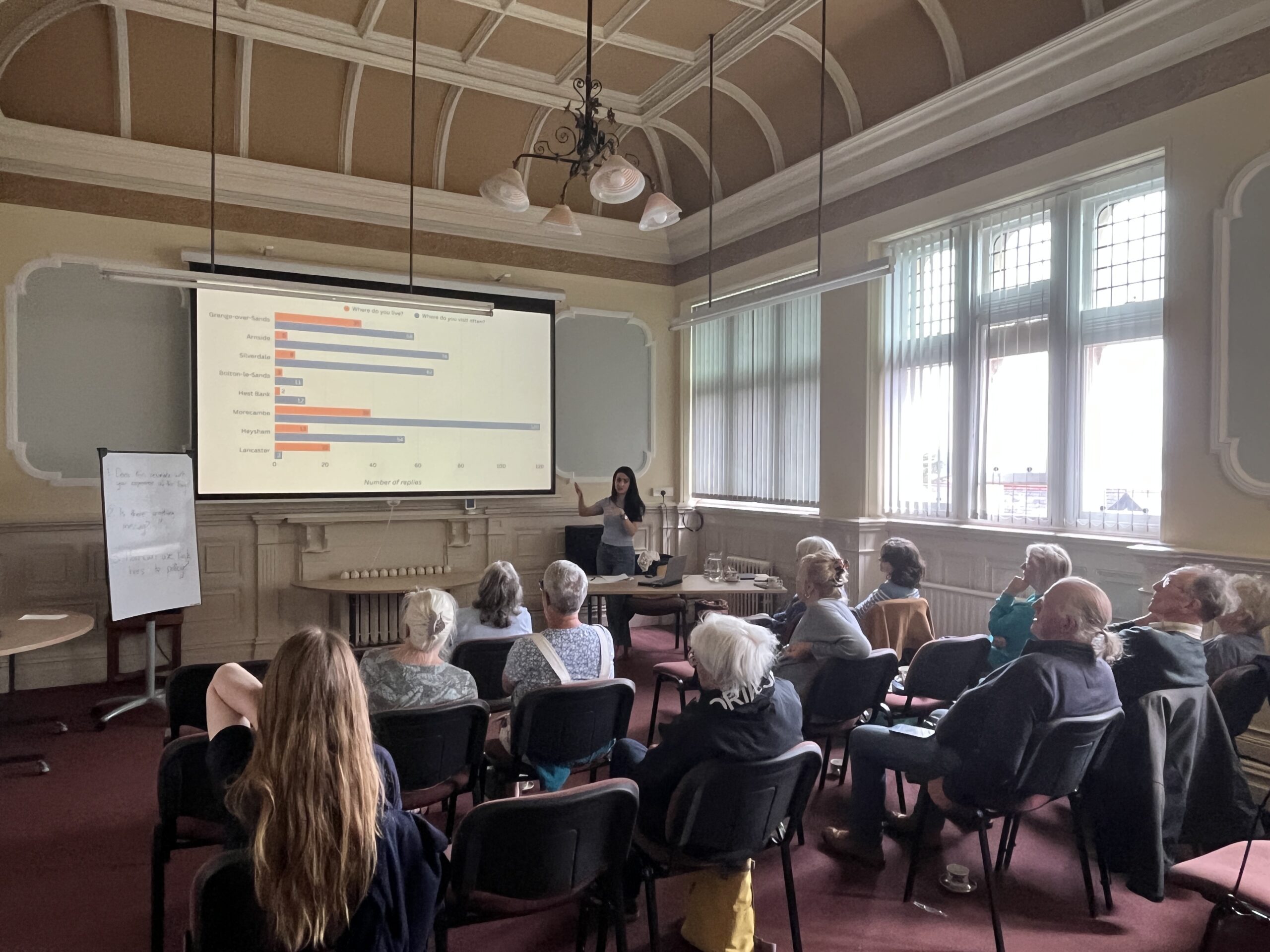
- A plan to share the findings in a timely and transparent fashion with decision-makers and local stakeholders, for example through community events or website publications.
Participatory Socio-cultural Valuation—questionnaire
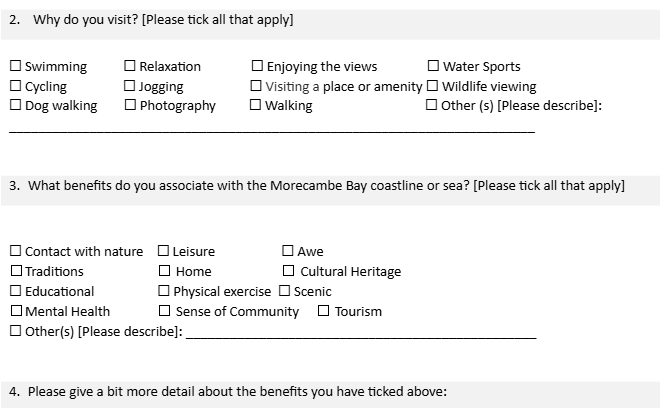
The Participatory socio-cultural valuation—questionnaire tool in MARBEFES is designed to capture social perceptions and cultural values associated with ecosystems, particularly in coastal and marine contexts. It focuses on the two-way relationships between humans and nature, assessing how ecosystems provide cultural benefits such as a sense of place, relaxation, inspiration, spiritual value, and community well-being, while also considering how human interactions contribute to the co-production and maintenance of ecosystem health.
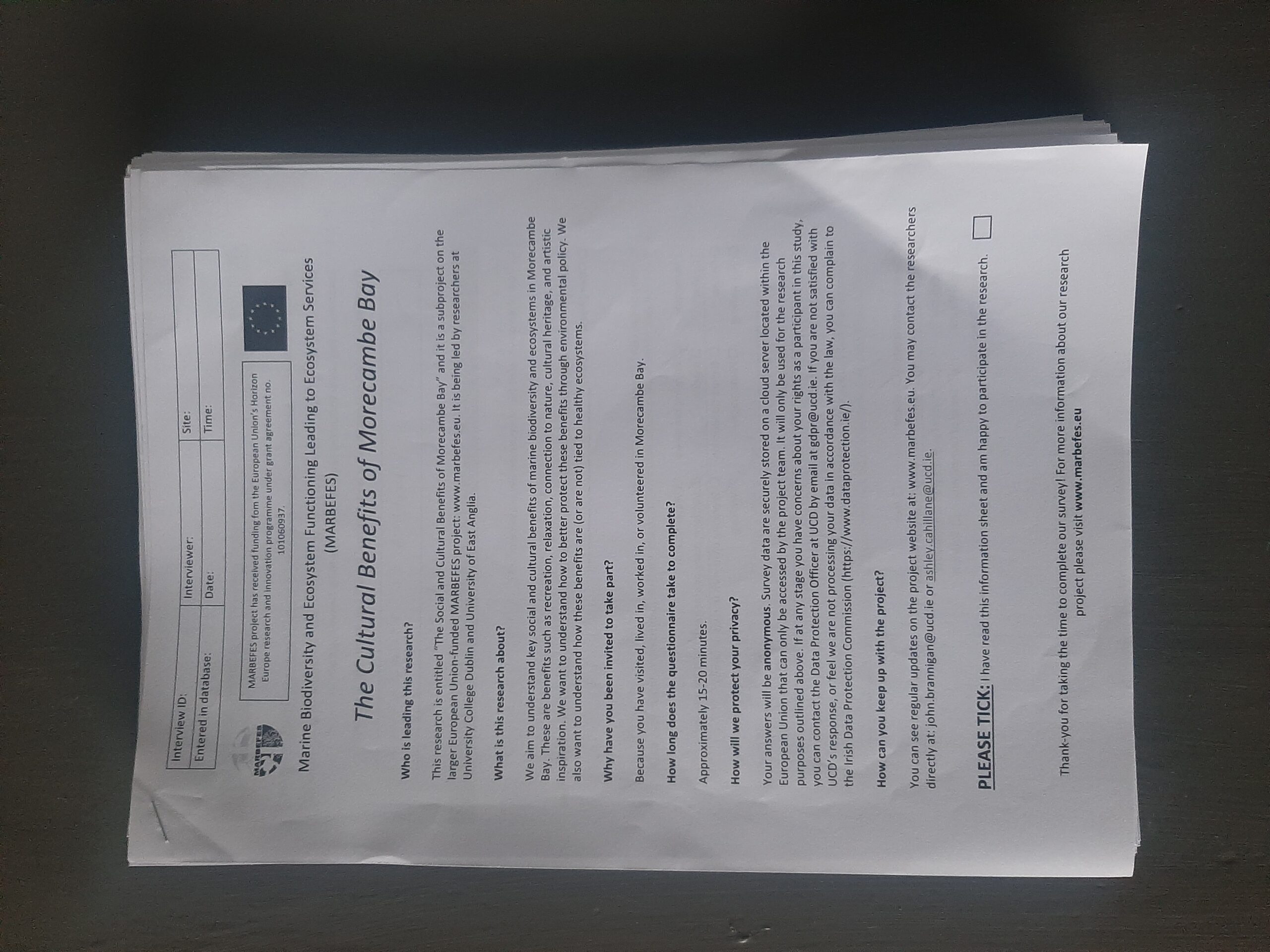
This tool uses a participatory approach through a questionnaire which includes spatial mapping exercises. Through these methods this method, it elicits both qualitative and quantitative data on how stakeholders perceive ecosystem change, management, and cultural benefits. For instance, respondents will map marine locations that they do and do not visit, and provide reasons why, which enables the identification of cultural hot or cold spots.
By engaging a diverse range of stakeholders—such as fishers, conservationists, local residents, artists, heritage groups, NGOs, and businesses—the tool uncovers both common values and conflicting perceptions. This enables planners and policymakers to understand what aspects of cultural ecosystem services are most valued, which may not be captured through conventional economic valuation.
Outputs include datasets, spatial mappings of cultural ecosystem services, and narratives of human-nature interactions. These results can inform environmental planning, marine spatial planning, and policy design, ensuring decisions align with local cultural values and priorities. Importantly, the tool has the capacity to collect data from a large amount and range of stakeholders, which can present a comprehensive portrait of diverse local (and in some cases touristic) perceptions
The method builds upon resources like the Cultural Value of Coastlines Toolkit cultural-value-of-coastlines-to…, which provides guidance on participatory surveys, mapping, local advisory groups, and cultural representations. This expands the evidence base for ecosystem services assessments, filling a key gap where cultural values are often underrepresented or excluded.
Overall, the participatory socio-cultural valuation—questionnaire tool offers a flexible, inclusive, and scalable framework for integrating cultural ecosystem services into environmental governance, from local communities to regional and EU-level strategies.
This tool works well when paired with the Participatory Socio-cultural Valuation—interviews, surveys, arts-based workshops tool to gain additional insights and contextual information from stakeholders. As part of a mixed-methods approach, it can gain extensive and comprehensive insights into local perceptions and foster community ownership of the research.
Availability / URL:
- Example application: https://culturalvalueofcoastlines.com/
- Toolkit: Cultural Value of Coastlines Toolkit PDF
- Toolkit: Public Participation geographical information systems (PPGIS)
- Draft MARBEFES guidelines shared via Google Drive (links provided by developer)
- Art and the Healing Powers of Morecambe Bay: A User Story Based on Participatory Socio-cultural Valuation (Questionnaire)